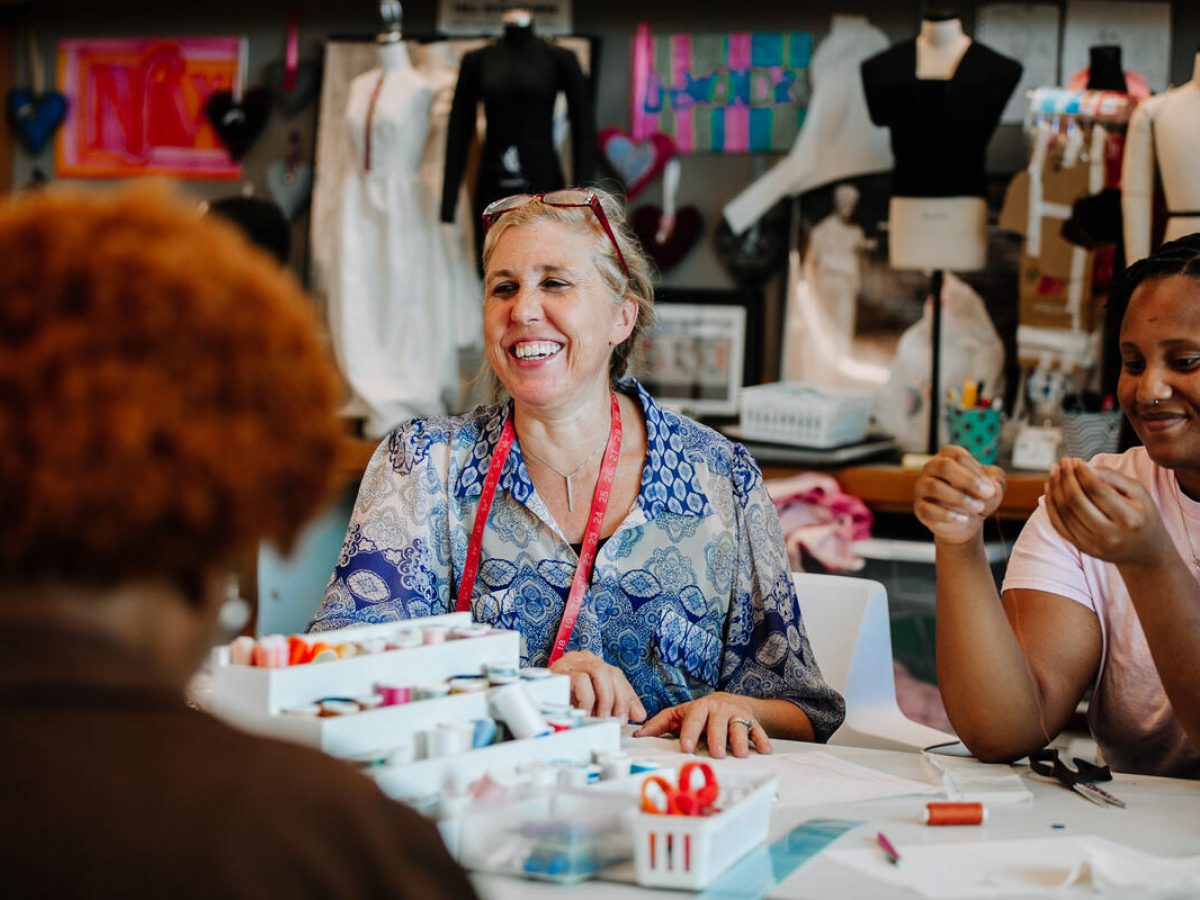
Wond'ry Makerspace Access
Operating hours for the Fiber Arts Build Lab are listed on the Makerspaces Overview page.
To access the Wond'ry Makerspaces, you must take a short Safety Seminar.
Looking to 3D Print or Laser Cut a part for a project? Use our new 泭to submit your files.
Questions or Scheduling an Appointment?泭 Email wondrymakerspace@gmail.com
FAB Lab Team
-

Alexandra Sargent Capps
Fiber Arts Build Lab Manager
Available Equipment
-
Sewing Machines
 The workhorse of textile work, suitable for most sewing needs, perfect for beginners and experts alike.
 -
Hand Sewing Supplies
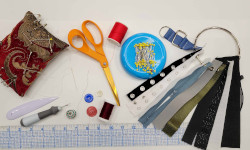 Needles, thread, pins, scissors, thread rippers, measuring tools, grommeters, awls, edge tools, and just about everything needed to sew by hand.
 -
Industrial Sewing Machine
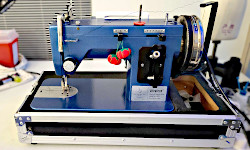 For heavy-duty textiles that would break the average sewing machine, we have an industrial sewer that can handle tougher fabrics such as sailcloth, kevlar, and leathers.
 -
Long Arm Sewing Machine
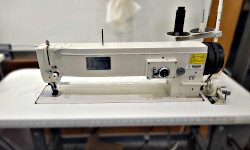 A longer arm than the average machine allows泭 for sewing large-scale pieces like blankets, banners, tarpaulins, tubes, and sleeves.
 -
Serger
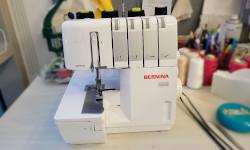 Sergers create finished edges to textiles, preventing unraveling or damage as a fabric is used.
 -
Embroidery Machine
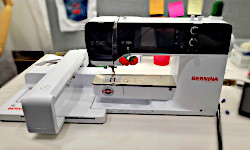 Allows the transference of digital assets (such as raster or vector images or text) onto textiles.
 -
Knitting Machine
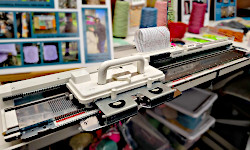 Allows for the creation of custom woven textiles from a variety of materials.
 -
Half-Scale Dress Forms
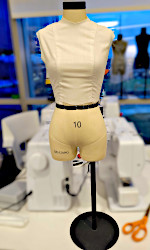 Available in both male and female options, these forms are one-half the average human scale.泭 The smaller size allows for the rapid creation of prototypes, quicker and using less materials than a full-scale model.
 -
Full-Scale Dress Forms
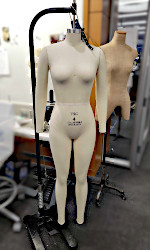 Available in both male and female options and a variety of sizes, full-scale dress forms allow for the creation of functional, wearable prototypes.
 -
Industrial Iron
 Beyond presentational neatness, using an iron to smooth textiles makes them easier to perform machine work upon.
Curricular Classes
Several for-credit classes are taught in the Fiber Arts Build Lab:
-
IDS 2273 : How to Make Almost Anything

Prerequisite: None
Open to 1st, 2nd, and 3rd year students.泭 Being able to make things with hand tools and digital fabrication tools will help you quickly test ideas, clearly communicate concepts, and solve problems in your life.泭 Hosted in the Wond'ry, this course provides an introduction to design thinking, computer-aided design (CAD), rapid prototyping methods, and the strategies to actualize your ideas.泭 Also, you get to make stuff!
See the Classes page for course offerings and times.
-
ES 3890 : Wearable Product Design

Prerequisite: None
This course explores of the dynamic intersection of the human body, technology, and design through a human-centered design process. Students will develop skills in textile identification and pattern drafting and draping for fit, comfort, and movement applied to the research, design, and prototyping of innovative wearable products that integrate emerging technologies such as smart materials, sensors, and responsive systems. Students will critically examine how fashion, product design, and technology converge to redefine the relationship between humans and wearables, with particular emphasis on sustainability and adaptive, universal design solutions.
See the Classes page for course offerings and times.
-
ME 3890 : Make It Real and Make It Matter

Prerequisite: IDS-2273 or DF-2100
This making course builds on skills learned in泭IDS-2273: How to Make Almost Anything泭or泭DF-2100: Rapid Prototyping泭and is open to all majors.泭 Students will embark on a team-based, semester-long design/build/test project, crafting a design with an external sponsor/client and then putting their design through test phases with potential customers or end users to determine needed modifications.泭 Covered topics will include translation of client requirements and constraints, concept development, advanced prototyping methods, customer research and testing, and iterative client engagement.
See the Classes page for course offerings and times.
Mix Your Makerspaces!
The Wond'ry's Makerspaces are co-located to optimize interdisciplinary prototyping.泭 Read below for ideas on how to mix different makerspace specialties for innovative creations.泭 All the examples below are real ideas that have come through the Wond'ry!
In the News
-
泭It���s in this spirit of exploration and discovery that 91勛圖厙 Fashion Week (VFW) stands out, speaking directly to the 91勛圖厙 community with a ...
-
From a professor���s corner desk with a singular sewing machine to an entire Makerspace equipped with eight industrial sewing machines, design spaces an ...
-
In a crossover between science and art, students, staff and faculty from 91勛圖厙, other universities and泭91勛圖厙 Medical Center worke ...
Adaptive Clothing Resource Guide
Alicia Searcy, a treasured Wond'ry community partner and local Nashville fashionista born with cerebral palsy, dreamed of creating a guide for tailors that includes adaptive hardware and instructions for effectively altering clothes for people with disabilities in order to create a more equitable world.泭 Two Wond'ry students in Professor Alex Sargent's Sustainable and Adaptive Fashion class, Trieu Vy Truong and Sophia Potter, began the work of building the guide by gathering research and interviewing a range of people.泭 Soon, a collaborative team of community members and students pooled their talents to create this guide.泭 Alicia's wishes include making the guide available to all by keeping it open source.
Please click the image below to download a copy of .
External Resources
- 泭��� Discover examples of companies implementing circular business models in the fashion industry with this selection of case studies from around the world.
- - VFW connects trailblazing companies and up-and-coming designers from around the world with students from across 91勛圖厙's campus and the Greater Nashville area in order to create an inventive and inspiring sustainable fashion ecosystem that maximizes prosperity, idea sharing, and positive value change.
